Every square centimetre has a role to play. Discover the layouts that maximise flow, storage, and cooking efficiency in even the smallest kitchen footprints — without sacrificing style or comfort.
Not all floor plans are created equal. These four configurations have been proven to deliver the best efficiency, ergonomics, and storage capacity in compact spaces.
The most efficient linear layout in kitchen design. Two parallel walls of cabinetry and appliances create the optimal work triangle with zero wasted movement.
Corner space utilisation at its finest. The L-shape opens one end to adjacent living areas while still delivering generous counter surface and flexible work zones.
Maximum storage delivered across three walls. The U-shape wraps the cook in cabinetry and counter space, minimising steps and maximising accessibility.
Open-plan flow combined with substantial counter extension. The peninsula connects kitchen to living space while providing breakfast bar potential and extra prep surface.
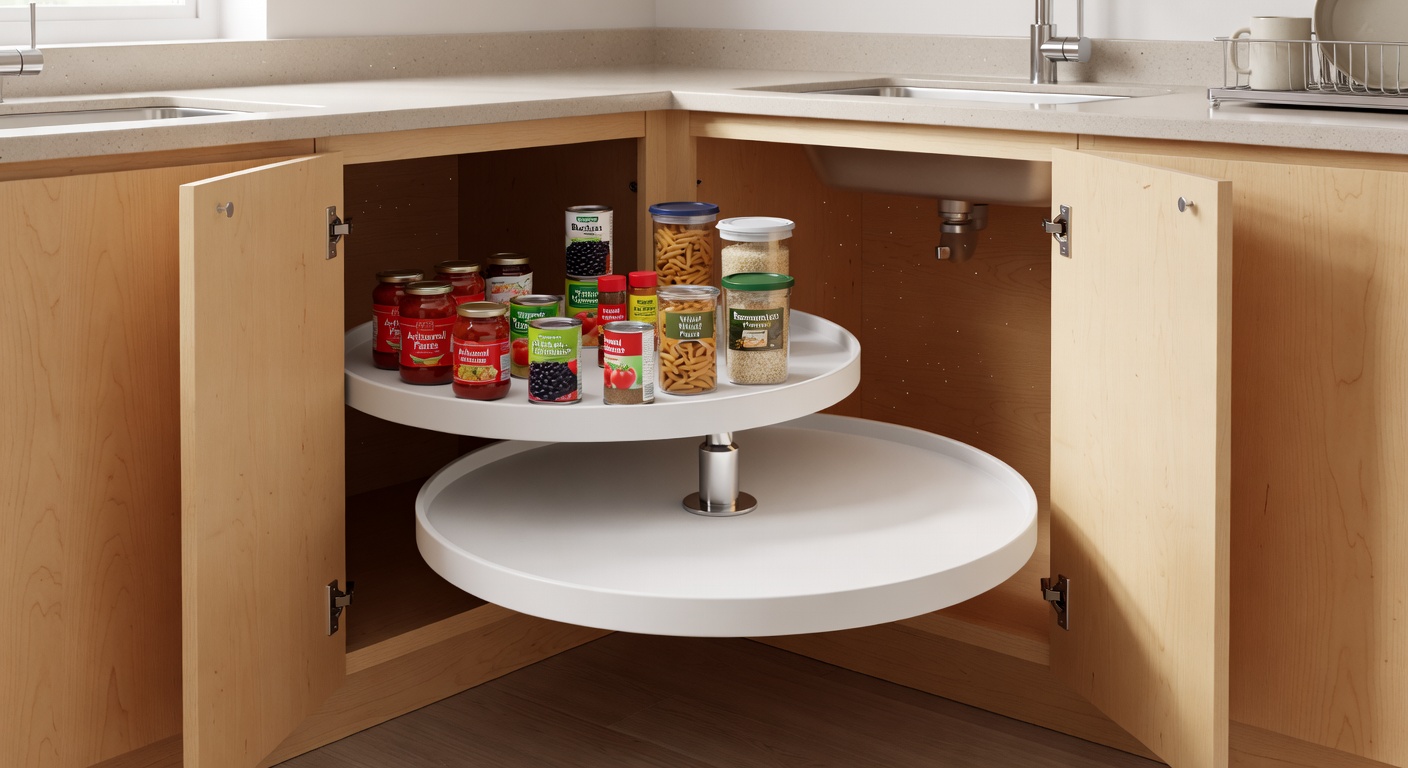
Corner lazy susan — zero dead space
The corner is where small kitchens lose the most usable space. Standard cabinet layouts leave awkward, inaccessible voids — but with the right fittings, those corners become some of your most productive storage zones.
Modern corner solutions have evolved far beyond the basic rotating tray. Today's options include full-pull-out carousel systems, magic corner units, and diagonal cabinet configurations that make every millimetre count.
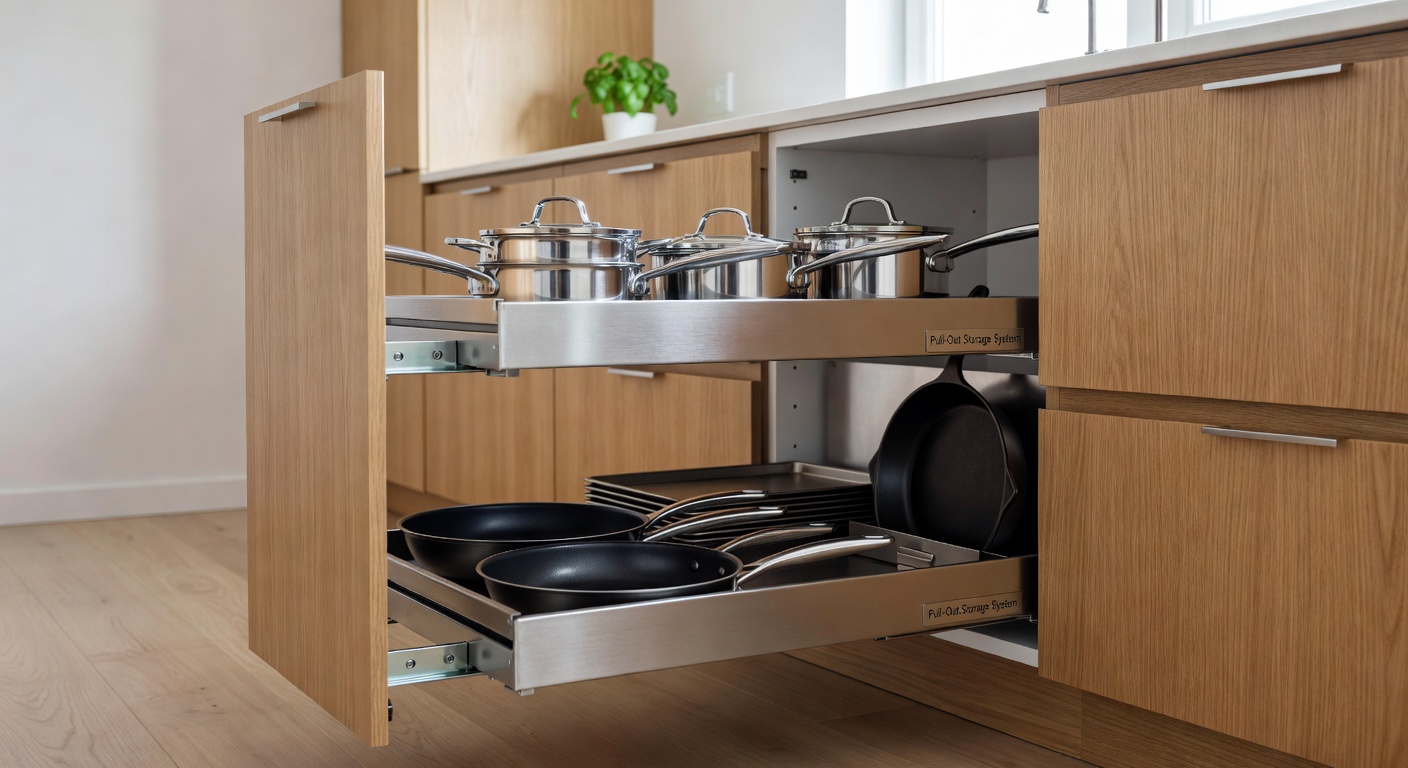
Full-extension pull-outs — total access
Fixed shelves are the enemy of small kitchen efficiency. When you can only access the front third of a cabinet, you effectively waste two-thirds of the space you paid for. Pull-out and drawer systems change everything.
Deep drawer systems and full-extension runners allow the entire cabinet interior to come to you — no kneeling, no reaching, no forgotten items at the back. Combined with soft-close mechanisms and custom organiser inserts, these systems transform base cabinets completely.
Small adjustments at the planning stage deliver outsized results. Keep these principles in mind when designing or reconfiguring your kitchen layout.
Position your hob, sink, and refrigerator so each leg of the triangle measures between 120cm and 270cm. Shorter trips means less fatigue and faster cooking.
Allow at least 90cm between facing counters for single-cook kitchens. For two cooks, aim for 120cm. This space must remain permanently clear of appliances.
Group prep, cooking, and cleaning into distinct zones. Store items at the point of use — knives near the chopping board, spices beside the hob, glasses near the sink.
Extend cabinetry to ceiling height. The top 60cm above standard cabinets is often wasted — use it for rarely used items or a stepped display shelf.
Map every door and drawer opening before finalising positions. Conflicting swings from cabinet doors, appliances, and room doors are among the most common small kitchen frustrations.
Under-cabinet strip lighting eliminates counter shadows and visually expands the space. Light-coloured cabinet fronts and reflective surfaces amplify natural light throughout the room.