Vertical Storage

Use Every
Inch of Height

Vertical space is the most underutilised dimension in small kitchens. While homeowners obsess over floor area, the real storage opportunity stretches upward — from counter height all the way to the ceiling and beyond.

Why Vertical
Storage Works

Most kitchen designs optimise for the zone between knee and eye height — roughly 80cm of usable space. But a standard kitchen ceiling sits 240–260cm above the floor. That leaves over 160cm of vertical potential almost entirely ignored.

Rethinking storage vertically doesn't require structural renovation. Wall shelves, ceiling racks, door-back organisers, and tall cabinets all deploy existing surfaces — surfaces you already own — to dramatically expand your effective storage volume without taking a single square centimetre of floor space.

40%
More storage capacity Floor-to-ceiling cabinets vs. standard-height units of identical width
70%
Lower cost than new cabinets Open wall shelves installed vs. equivalent cabinet addition
2 ft²
Counter space reclaimed Average freed when pots and pans move to a ceiling rack
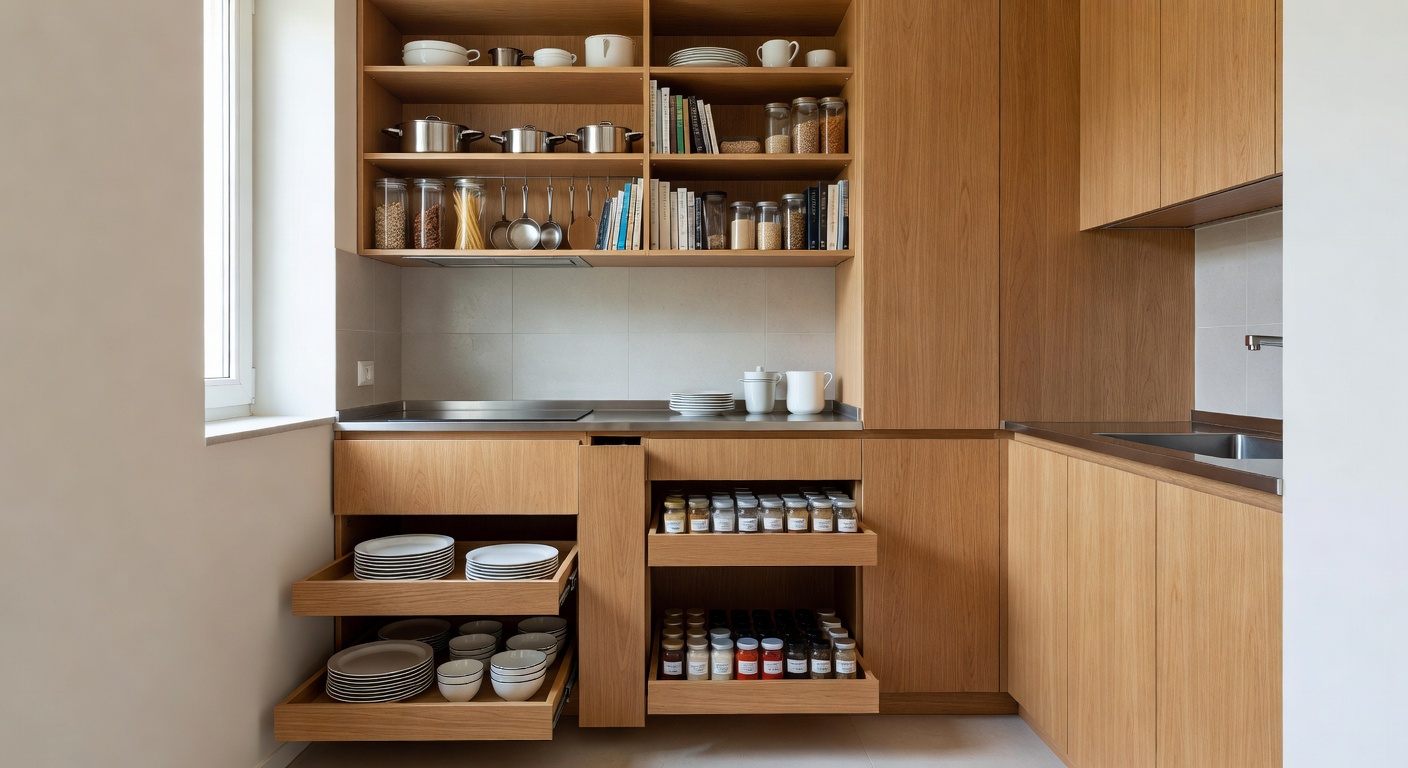
Floor-to-ceiling vertical storage cabinets in a compact kitchen Floor-to-ceiling cabinets — 40% more storage
Vertical Storage Solutions

Eight proven systems for maximising height in any small kitchen — from no-drill options to full cabinet installations.

🗄

Floor-to-Ceiling Cabinets

Extend standard kitchen cabinets all the way to ceiling height. The topmost zone stores rarely accessed items while keeping everyday essentials at eye level.

High Impact
🪞

Open Wall Shelving

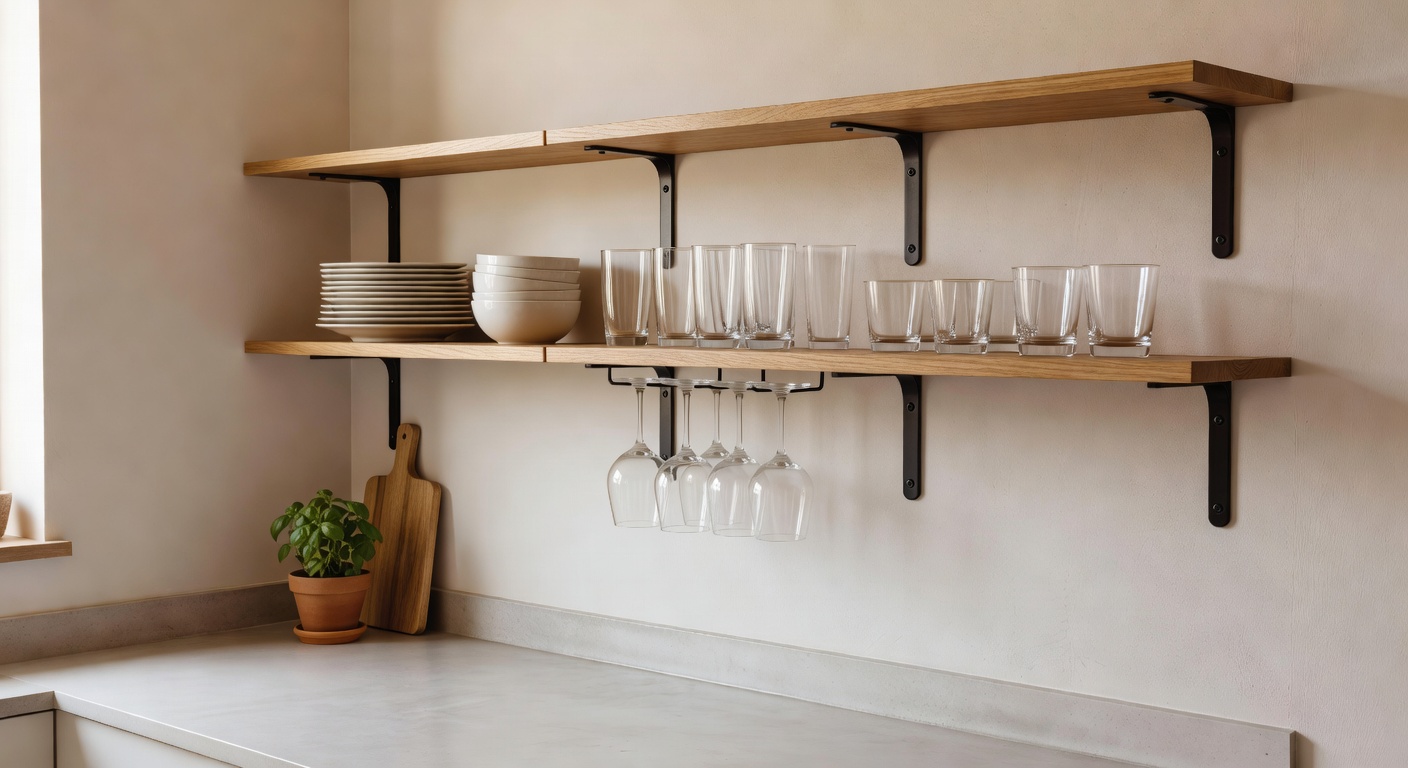
Floating shelves installed above counters or on bare walls deliver instant storage without the cost of cabinets. Style them to display beautiful items while storing practical ones.

Quick Install
🍳

Ceiling Pot Racks

Suspend pots and pans from the ceiling above an island or peninsula. Frees 2+ sq ft of cabinet space and turns cookware into a visual design feature.

Counter Saver
🔪

Magnetic Knife Strips

Mount a magnetic strip on any vertical surface — backsplash, side panel, or wall. Keeps knives accessible, visible, and safely stored without a bulky block on the counter.

No-Drill Option
🚪

Door-Back Organisers

The back of cabinet doors is prime, ignored real estate. Install wire racks, spice holders, or foil/wrap organisers to create storage that doesn't take up shelf space.

Hidden Space

Pegboard Walls

A full pegboard wall panel transforms a blank surface into a fully customisable storage grid. Hooks, shelves, bins, and baskets can be repositioned as your needs change.

Flexible
📚

Stacking Shelf Inserts

Double the capacity of any existing shelf by adding a second tier on top. Ideal for plates, mugs, tins, and spices — converts one shelf into two with no installation required.

No Tools

Tall Narrow Pull-Outs

Slim pull-out towers (15–20cm wide) fill the gaps between appliances or beside the fridge. Pantry-style vertical pull-outs hold spices, tins, bottles, and baking essentials.

Gap Filler
Beautifully styled wall-mounted display shelves in a minimal kitchen Wall shelves — style meets function

Open Shelving
Done Right

Open shelves are transformative when executed well — and disappointing when they become cluttered ledges. The difference lies in knowing when to use them, how to style them functionally, and what specifications to follow.

The key principle: open shelves should display items you use daily and are proud to show. Everything else stays behind a door. This natural edit keeps shelves tidy while making frequently used items even more accessible.

Specification Recommendation
Shelf spacing 25–30 cm for mugs, glasses, small items
Shelf spacing 35–40 cm for plates, bowls, taller items
Shelf depth 25–30 cm standard; 20 cm for spice rows
Max load (solid wood) 15–20 kg per bracket pair (60 cm span)
Max load (floating) 10–12 kg per bracket pair — check fixings
Lowest shelf height Min 45 cm above counter surface
Styling ratio 70% functional items, 30% decorative

Step-by-Step:
Install Wall Shelves

A well-installed floating shelf lasts decades. Follow these steps to ensure yours is level, secure, and capable of supporting a full load.

1
📋

Plan Your Positions

Mark the desired shelf heights on the wall with a pencil. Use a spirit level to draw horizontal reference lines. Consider the height of items to be stored — allow sufficient clearance above the tallest item on each shelf. Photograph the layout before drilling.

Tip: Stand in your natural cooking position and test reach before committing
2
🔍

Locate Wall Studs and Services

Use a stud finder to locate timber or metal studs behind the plasterboard. Mark stud centres clearly. Use a cable and pipe detector to identify hidden electrical cables, water pipes, and gas lines before drilling anywhere. Never skip this step.

Stud spacing is typically 40 cm or 60 cm in most European and UK buildings
3
🔩

Choose the Right Fixings

For shelves bearing significant weight, fix directly into studs with 60mm wood screws. On masonry walls, use 8mm rawl plugs with M6 bolts. For lightweight shelves on plasterboard only, use cavity fixings rated to at least double the expected load.

Rated fixing load should be 3× the expected shelf weight for a safety margin
4
🪛

Install Brackets

Drill pilot holes at your marked positions, insert wall plugs if required, and fix the first bracket. Hold it against your level line and tighten. Fix the second bracket at the opposite end, checking it is level with the first using a spirit level placed across both.

Always fix the end brackets first; add intermediate brackets for shelves over 90 cm
5
📏

Fit and Secure the Shelf Board

Place the shelf board onto the brackets and check once more for level. Mark and pre-drill screw holes up through the bracket into the underside of the shelf. Fix with appropriate screws — do not overtighten and split the board. Fill and paint any visible fixing points.

For hardwood shelves, always pre-drill to prevent splitting when driving screws
6

Load Test and Style

Before adding your kitchen items, perform a load test by placing a weight equal to the intended load on the shelf for 10 minutes. Check for any flex or movement. Once confirmed secure, arrange items using the 70/30 functional-to-decorative ratio. Step back and adjust for visual balance.

Re-check all fixings after 30 days — fixings can settle slightly in the first month
Get Expert Help

Ready to Go
Vertical?

Tell us about your kitchen dimensions and we will map every viable vertical storage opportunity — from ceiling height to the back of every door — with product recommendations and installation guidance.

Get Your Vertical Storage Plan